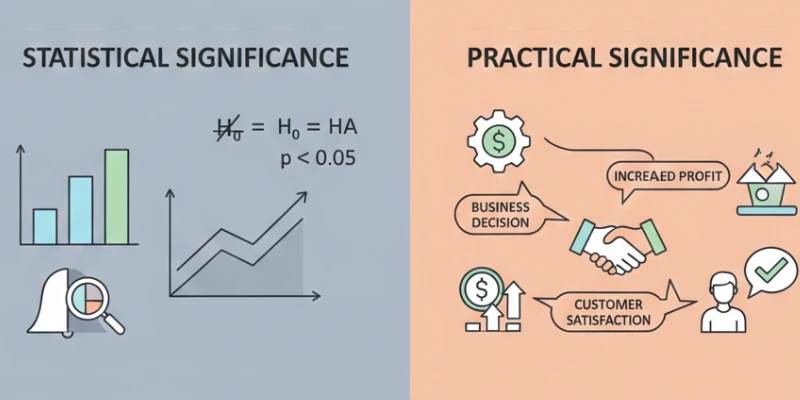
In data analytics, numbers often guide decisions, but understanding what those numbers truly mean is equally important. Two commonly misunderstood concepts are statistical significance and practical significance. While they sound similar, they answer very different questions and serve different purposes in analysis. Many beginners focus only on statistical results without considering whether those results matter in real life.
Learning this difference early helps analysts avoid misleading conclusions and make better data driven decisions. If you want to build a strong foundation in such core analytical concepts, you may consider enrolling in the Data Analyst Course in Trivandrum at FITA Academy to gain structured learning with practical clarity.
What is Statistical Significance
Statistical significance assists in assessing if a noted result is probably a result of random chance or if it indicates a genuine effect in the data. It relies on probability and hypothesis testing to assess whether a relationship or difference exists. Analysts often use significance levels to decide whether to reject a null hypothesis.
When a result is statistically significant, it means the data provides enough evidence to support a finding. However, statistical significance does not indicate how strong or useful that finding is. It only confirms that the result is unlikely to have occurred randomly under specific assumptions.
What is Practical Significance
Practical significance focuses on whether a statistically significant result has real world importance. It asks whether the size of the effect is meaningful enough to influence decisions, policies, or business outcomes. A change can be statistically significant but too small to matter in practice.
For example, a tiny increase in sales may be detected by data but may not justify a change in strategy. Practical significance helps analysts connect numbers to context. It ensures that insights lead to actions that create measurable value rather than just technical validation.
Key Differences Between Statistical and Practical Significance
The main difference lies in interpretation and impact. Statistical significance is about confidence in the result, while practical significance is about usefulness. Statistical tests rely on sample size and variability, which means large datasets can make very small effects appear significant. Practical significance considers domain knowledge, cost, risk, and expected benefits.
Ignoring practical relevance can lead to decisions that look good on paper but fail in execution. This distinction is essential in business analytics, healthcare, marketing, and policy analysis. Professionals looking to strengthen applied analytics skills may find value in taking a Data Analytics Course in Kochi to better connect theory with real scenarios.
Why Both Concepts Matter in Data Analytics
Using only statistical significance can lead to overconfidence in weak insights. Using only practical significance can lead to subjective decisions without proper evidence. Together, they create a balanced approach to analysis. Statistical significance validates that a finding is real, while practical significance ensures that the finding is worth acting on.
Data analysts must communicate both aspects clearly to stakeholders. This combined understanding builds trust in insights and supports smarter decision making. It also helps avoid common pitfalls such as chasing insignificant improvements or ignoring impactful trends.
Statistical significance and practical significance are not competing ideas but complementary tools. One confirms the reliability of a result, while the other confirms its relevance. Effective data analytics requires knowing when a result matters mathematically and when it matters operationally.
By mastering both concepts, analysts can turn data into insights that truly drive change. For those aiming to develop a strong analytical mindset and industry ready skills, enrolling in the Data Analyst Course in Jaipur can be a practical step toward deeper understanding and career growth in analytics.
Also check: Understanding Regression Analysis Made Simple