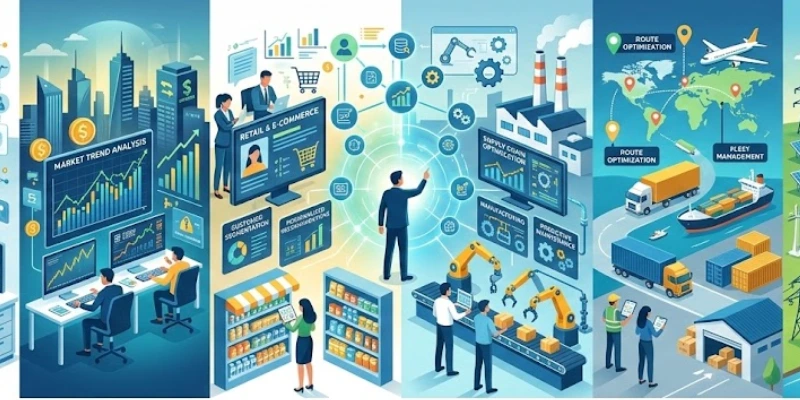
Data analysis has quietly become part of everyday work across industries. From business decisions to public services, data now shapes how organizations think and act. Many people step into this field out of curiosity, trying to understand how numbers turn into insights that guide real decisions. That curiosity often grows when learners start structured learning paths, such as Data Analytics course in Trichy, where raw data begins to feel less abstract and more connected to real-world problems and careers.
Business and decision-making systems
Companies use data analysis to understand customers, sales patterns, and operational performance. Data helps leaders decide what to invest in, which markets to grow, and where costs can be reduced. Instead of relying only on experience or intuition, decisions are backed by patterns and trends. This creates more stable business strategies and reduces risk. Data-driven decision-making is now a basic expectation in modern organizations.
Healthcare and patient care insights
Hospitals and healthcare systems use data analysis to improve patient outcomes and service quality. Patient records, treatment results, and operational data help doctors and administrators make better decisions. Analysis supports disease prediction, treatment planning, and resource management. This reduces waiting times, improves care quality, and helps healthcare systems work more efficiently. Data becomes a support tool for both medical professionals and management teams.
Regional job growth and opportunities
Data roles are growing beyond large cities and global companies. Local businesses, startups, and service industries are adopting data-driven approaches. This creates job opportunities in regional markets where digital transformation is accelerating. Learners building skills through paths like Data Analytics Course in Erode often find roles in education platforms, finance services, healthcare systems, and local enterprises that value practical data skills.
Education and learning systems
Schools and education platforms use data to understand student performance and learning behavior. Data analysis helps identify where students struggle and what teaching methods work best. Digital learning platforms use this information to personalize learning experiences. Education becomes more adaptive and student-focused. Data helps teachers and institutions improve learning quality rather than relying solely on traditional assessment methods.
Finance and risk management
Banks and financial institutions rely heavily on data analysis. Transaction data, customer behavior, and market trends help manage risk and detect fraud. Data supports credit decisions, investment planning, and customer service improvement. Financial systems now depend on real-time analysis to prevent losses and improve reliability. Data analysis strengthens trust in financial services by reducing uncertainty and error.
Skill development and career paths
Data analysis is no longer a single-role skill. It connects with business, technology, healthcare, and research. Professionals often expand their skills into deeper technical areas, such as Data Science Course in Trichy, where analysis evolves into modeling, automation, and predictive systems. This creates broader career paths that combine logic, technology, and decision-making. Data professionals become problem-solvers, not just number handlers.
Industry transformation through data
Data analysis is changing how industries operate at a basic level. Processes become automated, systems become predictive, and decisions become faster. Companies shift from reactive thinking to proactive planning. Data becomes a core business asset, not just a support function. This transformation changes job roles, business models, and organizational structures.
Data analysis matters because it changes how industries think, plan, and grow. It builds systems that learn from data rather than guesswork. For careers, this creates long-term relevance and adaptability. Professionals who understand data systems become valuable across sectors because every industry now depends on information-driven decisions. That foundation supports future-ready growth, especially when learning paths evolve into deeper domains like Data Science Courses in Erode, where analytics meets advanced technology and long-term career development.
Also Check: Top 5 Programming Languages for Data Analysis