Understanding the different types of cloud computing has become essential for learners who want to build strong tech careers in today’s digital world. As organizations increasingly rely on virtual systems and scalable infrastructure, mastering these concepts opens doors to high-demand roles. For many beginners, exploring how public, private, and hybrid environments work becomes easier when they learn with clarity and practice, and this is why starting with Cloud Computing Courses in Trichy can help create a focused path toward a future-ready career.
Understanding the Growing Importance of Cloud Technology
Cloud technology has reshaped modern work environments by enabling flexibility, scalability, and cost efficiency. For beginners, learning these concepts early provides a strong foundation for advanced domains like networking, security, and virtualization. As more companies migrate their systems to a cloud, professionals who understand deployment models and service layers find themselves better prepared for dynamic job roles. This shift makes cloud knowledge not just an advantage but a requirement for long-term growth.
Transforming Students into Young Professionals
Practical exposure during the first few months like interning and guiding startup simulations reshapes the way students understand business challenges. They transition from learners to confident young professionals who can handle tasks independently. Many attract job offers faster due to their impressive early achievements. A supportive Business School in Chennai builds this transformation by blending industry projects, mentorship, and continuous practical engagement into its learning journey.
Breaking Down Public Cloud Models
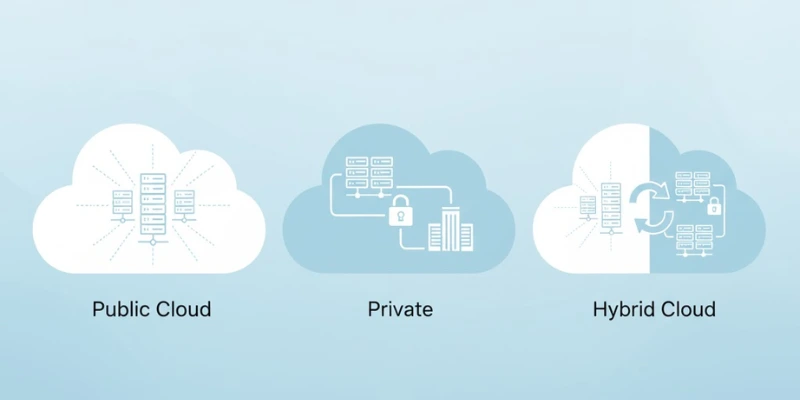
Public clouds are the most widely used among individuals and companies because they offer instant resources without maintaining physical hardware. Beginners often find them easier to understand since the provider manages infrastructure, security updates, and scalability. The public cloud also supports experimentation, allowing learners to test and deploy applications independently. With clear concepts, individuals gain confidence in handling shared environments while understanding how access, storage, and security responsibilities are distributed.
How Private Clouds Support Large-Scale Operations
Private clouds bring dedicated infrastructure to a single organization, offering enhanced control and security. They are commonly used by banks, government agencies, and companies that handle sensitive information. For learners, understanding private cloud architecture helps develop structured thinking around customization, monitoring, and policy-driven access. Gaining exposure to such environments allows beginners to explore advanced cloud practices that emphasize governance and technical precision demanded in enterprise-level operations.
Hybrid Cloud: The Balance of Flexibility and Control
Hybrid cloud models combine these two public and private environments, giving organizations the flexibility to choose where data and applications should run. This approach helps companies optimize costs, manage workloads efficiently, and maintain data protection. Learning how hybrid systems work strengthens a student’s analytical skills by showing how different environments communicate and operate together. As hybrid adoption continues to grow, individuals who understand its architecture remain competitive in evolving tech landscapes.
Exploring Cloud Service Categories (IaaS, PaaS, SaaS)
Understanding the service layers of cloud computing helps learners see how modern applications are built, deployed, and maintained. IaaS provides virtual machines and storage, PaaS supports development platforms, and SaaS delivers ready-to-use applications. Knowing when to use each service builds decision-making confidence. For many learners, expanding this knowledge alongside broader concepts such as skill development with the Artificial Intelligence Course in Trichy creates a strong blend of technical competence and modern problem-solving ability.
Security Considerations Across Cloud Environments
Security remains a critical part of cloud adoption, and knowing these concepts helps beginners understand how risk mitigation works. Topics like encryption, access control, identity management, and data compliance often play a significant role in determining cloud design choices. Learning these ideas early allows individuals to evaluate environments more effectively and prepares them for real-world decision-making. Professionals who build a strong understanding of security are better equipped to support safe and scalable cloud operations.
Why Cloud Knowledge Matters in Modern Career Paths
As more businesses rely on digital systems, cloud skills are becoming central to IT careers. Knowing the differences between public, private, and hybrid models helps learners choose the right direction in networking, development, DevOps, and security. With industries rapidly shifting toward automation and digital transformation, those who deepen their understanding through continuous learning such as exploring Cloud Computing Courses in Erode at the right stage gain a clearer advantage in competitive job markets.
Future Trends Shaping Cloud Adoption
Cloud computing continues to evolve with advancements like serverless architecture, multi-cloud strategies, and edge computing. Understanding these trends early gives learners the confidence to adapt to changing technologies. As companies explore more automation and AI-based cloud platforms, professionals who can navigate these transitions become highly valuable. Building long-term skills starts with understanding core models and gradually improving through hands-on practice and consistent study.
Future-Ready Growth
Exploring the main types of cloud computing helps learners build a strong foundation for future technology roles. By understanding public, private, and hybrid models and gaining clarity on service layers, individuals can move toward more advanced concepts with confidence. Strengthening this knowledge not only improves problem-solving ability but also makes learners adaptable to industry changes. As the tech world continues to shift toward automation and intelligent systems, the Artificial Intelligence Course in Erode supports learners in becoming future-ready professionals equipped for long-term success.
Also Check: 6 Ways Cloud Computing Can Save Your Business Money And Time